The Oxford 3000™
At OxfordAQA we believe that all students deserve a fair opportunity to demonstrate what they have learned and that their language level shouldn’t be a barrier to this.
A central aspect of our student-focused approach to assessment design is the language that we use in our International GCSE, AS and A-level exam papers.
We use a unique tool to ensure that the language is as clear as possible. It gives international students who speak English as a second language the same chance to achieve a top grade as native English speakers.
This tool is the Oxford 3000™ , a list of the most important words to learn in English.
How does the Oxford 3000™ support international students?
It removes obstacles to optimal student performance
An exam is not valid if complex vocabulary prevents students from displaying their skills and knowledge in a subject. We use the Oxford 3000™ across our International GCSE, AS and A-level exams to make sure that all students can focus on the key terms and clearly understand the task they have to complete in an exam question.
It ensures our exams only ever test subject competency
There are only two types of vocabulary in OxfordAQA exams:
- Subject vocabulary that is part of the specification and therefore part of the knowledge and skills that the exam is assessing
AND
- Words from the Oxford 3000™ word list
“OxfordAQA exams were the first time our students could just answer the science, rather than worrying about the language of the exams”
When we design the question papers, we aim to either remove any word that isn’t in one of these two core areas or clearly define that word within the question. The result is clear and precise questions that give every student the best possible chance to show what they can do.
It makes the UK-curriculum accessible for international learners
Removing complex language is important in any exam. But it’s even more important in examinations tailored to international schools, because many students are not native English speakers.
All words in the Oxford 3000™ lists are mapped to a language competency level in the Common European Framework of Reference (CEFR), from A1 to B2. This means that all our OxfordAQA exam papers can be benchmarked to a maximum B2 level in the CEFR framework, as a level of English that is accessible to non-native English speakers at GCSE, AS and A-level.
It creates an equal playing field for every international student
Focusing on the most frequent and important words in English, our exam papers create an environment where both native and non-native English-speaking students have an equal opportunity to demonstrate their subject skills.
How is the Oxford 3000™ word list created?
The Oxford 3000™ is generated by dictionary experts at our partner Oxford University Press. They select the words based on two criteria:
Frequency
The list contains the most frequent words from the Oxford English Corpus, a database of over 2 billion words from different subject areas and contexts which covers British, American and World English.
Relevance
The list contains the most relevant words from a specially created corpus of Secondary and Adult English courses published by Oxford University Press. The list therefore covers important vocabulary that learners will come across in the classroom.
The Oxford 3000™ is validated by experts and was developed in consultation with James Milton, Professor of Applied Linguistics, Swansea University, UK, and reviewed by Paul Nation, Emeritus Professor in Applied Linguistics, Victoria University of Wellington, New Zealand. Read more about the Oxford 3000™ here.
The Oxford 3000™ is a unique tool in OxfordAQA’s student-focused approach to assessment design and one aspect of how we create exams that are valid, reliable and comparable. Learn more about each area below:
Related News

Day-of-exam guidance: accessing urgent support

OxfordAQA celebrates global academic excellence with 2026 Go Further Awards
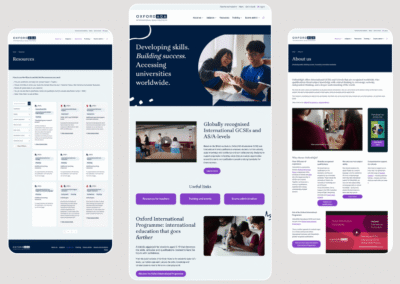
A simpler, faster way to find what you need
Become an OxfordAQA school
Register your interest to offer globally recognised qualifications and join a growing network of ambitious schools worldwide.
Working in partnership with